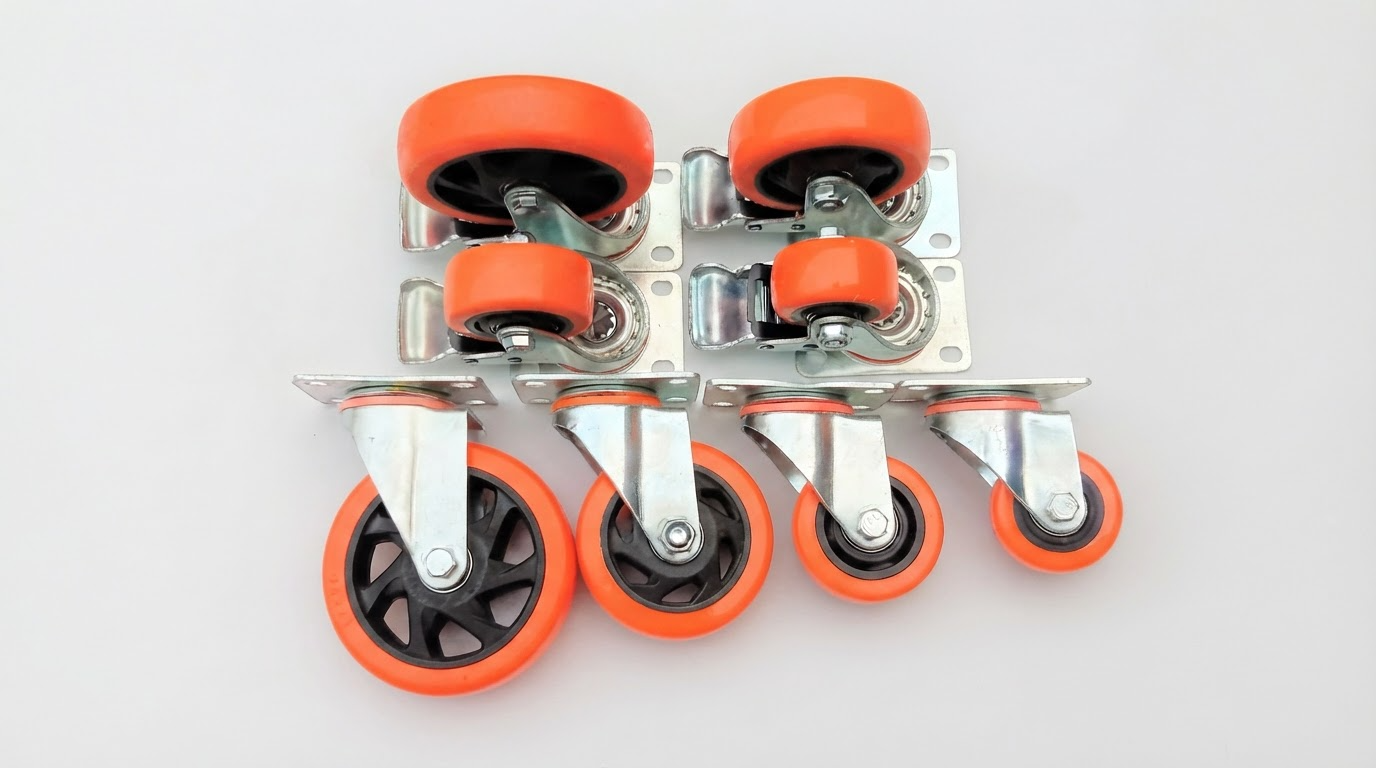
PU vs. PVC Caster Wheels: Which One Should You Choose?
PVC and polyurethane (PU) are two of the most common materials used in caster wheels across warehouses, construction sites, and manufacturing facilities.
Before comparing the two, it helps to understand what PVC wheels mean and how they differ from their polyurethane counterparts. Choosing between them requires more than comparing prices. Their differences can affect floor protection, noise levels, chemical resistance, load capacity, and overall wheel lifespan under daily use.
Whether you supply hardware stores or specify casters for trolleys, racks, and industrial equipment, understanding the characteristics of PVC vs. PU wheels can lead to better purchasing decisions.
Let’s explore how PVC and PU wheels compare in terms of performance, durability, applications, and cost to help you determine which option best fits your requirements.
What are Polyurethane (PU) Wheels?
Polyurethane wheels are made from a synthetic polymer that falls between rubber and hard plastic in terms of physical properties. The material is slightly elastic, resilient, and dense enough to carry heavy loads without flattening or developing surface cracks over time.
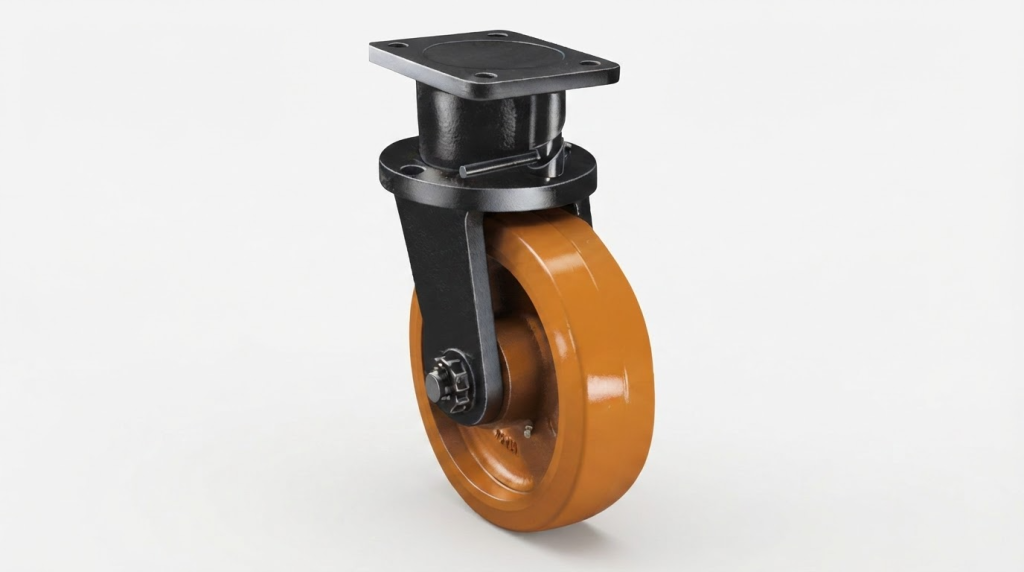
PU wheels are produced by casting or injection molding, which delivers consistent density throughout the wheel body, a key reason they perform reliably across a wide range of operating conditions.
PU wheels also bond well to metal or polypropylene cores, which adds structural integrity when the wheels bear significant weight over extended periods.
This core-and-tread construction is one reason polyurethane casters are a common specification for heavy-duty industrial caster wheels used in warehousing, logistics, and manufacturing facilities.
Pros of PU Wheels
- Quiet operation: PU wheels glide across hard floors without the clatter that harder materials produce, making them a preferred choice for hospitals, hotels, and retail showrooms.
- Floor protection: The softer composition leaves most surfaces intact, making PU safe for tiles, hardwood, and polished concrete.
- Strong shock absorption: The elasticity of polyurethane cushions vibration and impact, protecting both the cargo and the flooring beneath.
- High load capacity: Quality PU wheels carry significant weight without cracking or developing flat spots during prolonged use.
- Long service life: When kept away from harsh chemicals and sustained heat, PU wheels maintain their shape and grip for years of steady use.
Cons of PU Wheels
- Higher upfront cost: PU wheels carry a steeper price tag than PVC options, which becomes a significant factor for large-volume procurement.
- Chemical sensitivity: Exposure to certain oils, solvents, and acids can degrade the wheel material, limiting its use in some industrial environments.
- Heat limitations: Sustained high temperatures soften polyurethane and reduce its load-bearing capability, which is a drawback in hot processing facilities.
When to Use PU Wheels
PU wheels are ideal in environments where floor protection, quiet movement, and cushioning for sensitive cargo are top priorities. Medical facilities rely on them for hospital beds, IV stands, and diagnostic carts.
Warehouses that handle fragile goods benefit from the dampening effect on every run across the floor.
If you want to see how polyurethane compares to other polymer options, the polypropylene vs. polyurethane guide offers a detailed side-by-side look at material properties and performance benchmarks
What are PVC Caster Wheels?
PVC wheels are built from polyvinyl chloride, one of the most widely produced thermoplastics in the world and a material already familiar to most construction professionals through piping and fittings.
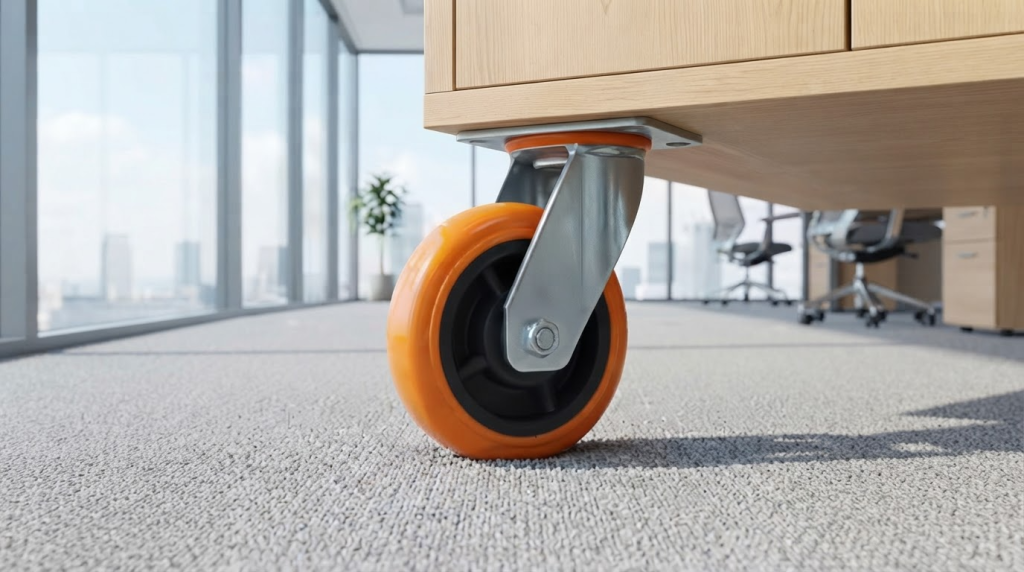
In caster applications, PVC delivers a hard, rigid wheel that resists chemicals and moisture better than most competing materials at a comparable price point.
When you line up PVC wheels vs. PU wheels side by side, the difference in hardness is immediately apparent. PVC wheels have a shinier, more plastic-like surface, while PU wheels show a softer, matte finish.
Pros of PVC Wheels
- Lower cost: PVC wheels cost less than PU options, making them practical for high-volume procurement or projects with tighter budgets.
- Chemical resistance: PVC handles exposure to oils, cleaning agents, and many industrial chemicals better than polyurethane.
- Moisture resistance: The non-porous surface does not absorb water, which extends wheel life in wet or outdoor conditions.
- Easy to clean: Smooth, non-porous surfaces resist dirt and product buildup, a practical advantage in manufacturing and food-adjacent environments.
- Stable on rough terrain: The rigidity of PVC provides solid, predictable support on uneven or semi-paved surfaces where softer wheels would flex unpredictably.
Cons of PVC Wheels
- Noisier movement: The hard contact surface produces more noise against smooth floors, which can be disruptive in quiet indoor spaces.
- Limited floor protection: PVC can scratch or scuff softer flooring materials, making it less suitable for finished interiors, showrooms, or real estate projects with decorative floors.
- Reduced shock absorption: The rigid composition offers little cushioning for delicate cargo, a drawback in settings where vibration control is a priority.
When to Use PVC Wheels
PVC wheels perform best in environments where chemical exposure, outdoor conditions, and heavy-handed daily use are standard.
Construction teams mount them on mobile tool storage and site equipment. Hardware store owners rely on them for utility carts and storage racks. Furniture manufacturers find them useful on workshop equipment where floor protection is less of a concern.
For a broader view of what is available across wheel materials and frame configurations, the types of caster wheels guide covers the full range of industrial and commercial options in one place.
PU vs. PVC Wheels: Key Differences at a Glance
The table below summarizes where each material excels and where it falls short so that you can match the right wheel to your operating environment.
| Feature | PU Wheels | PVC Wheels |
| Material | Polyurethane (synthetic polymer) | Polyvinyl chloride (rigid plastic) |
| Hardness | Softer, elastic | Hard, rigid |
| Noise Level | Low | Higher |
| Floor Protection | Excellent | Moderate |
| Shock Absorption | High | Low |
| Chemical Resistance | Moderate | High |
| Moisture Resistance | Good | Excellent |
| Load Capacity | High | Moderate to high |
| Cost | Higher | Lower |
| Best For | Medical, real estate, warehouses | Construction, industrial, outdoor |
Global Nexus: Your Partner for Reliable Industrial Caster Wheels
When it comes to the PU vs. PVC wheels decision, there is no one-size-fits-all answer. PU caster wheels deliver quiet movement, floor protection, and cushioning for sensitive cargo. PVC wheels earn their place in rougher, wetter, or more chemically demanding environments.
For hardware store owners, construction companies, and healthcare facilities, selecting the right caster starts with understanding the operating environment, load requirements, and floor conditions rather than relying on price alone.
Global Nexus carries a full range of industrial caster wheels engineered for the exact operating conditions businesses deal with every day. Our team can help you identify the right material, load rating, and mount type for your specific application.
Need help choosing between PVC and PU wheels? Reach out to us, and our experts will recommend the right caster solution for your operational needs.