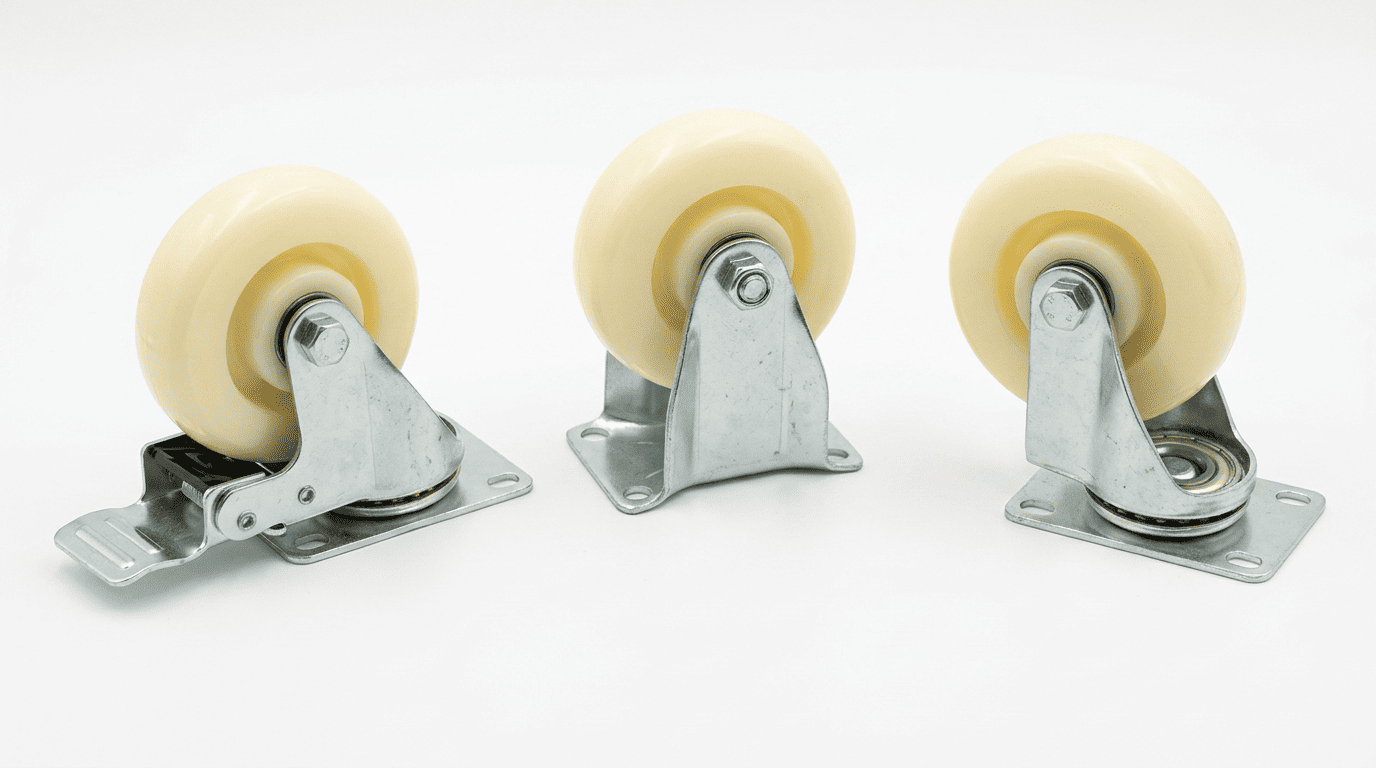
Nylon vs. Polypropylene Caster Wheels: What’s the Difference?
Polypropylene and nylon are two of the most commonly used materials for industrial caster wheels. While both are known for their durability and versatility, they offer different advantages depending on the environment, load requirements, and operating conditions.
Choosing the right caster wheel material affects more than just mobility. It can influence floor wear, maintenance requirements, equipment performance, and long-term operating costs.
Since each material has its own advantages and limitations, understanding where it performs best can help you select the right wheel for your application.
This guide compares polypropylene vs. nylon caster wheels, examining their key features, advantages, and ideal applications to help you determine which material best suits your business needs.
What are Nylon Caster Wheels?
Nylon is a synthetic polymer first developed in the 1930s and has since become one of the most trusted engineering plastics in industrial applications. Nylon caster wheels are known for their dense, rigid structure, which translates into high load-bearing capacity and excellent resistance to abrasion and impact.
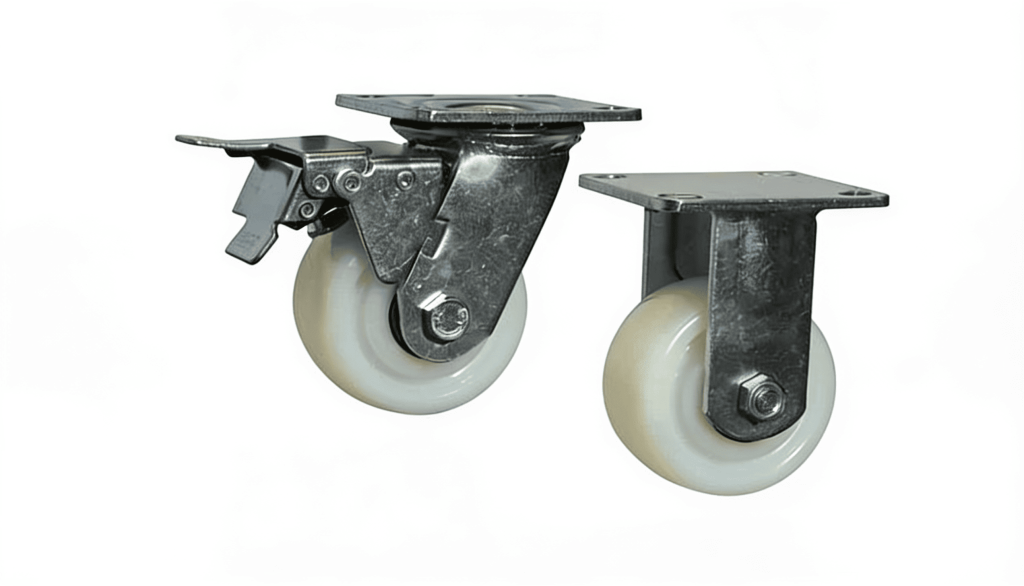
Because of these qualities, nylon caster wheels are commonly used in warehouses, factories, and hospitals. Their low rolling resistance also makes it easier to move carts, racks, and equipment across smooth surfaces.
They handle demanding workloads with ease, require minimal maintenance, and offer a long service life, making them a practical choice for heavy-duty material handling applications.
Pros of Nylon Caster Wheels
- High load capacity, depending on size and construction
- Excellent impact and abrasion resistance, ideal for rough surfaces and frequent use
- Withstands high temperatures, tolerating operating conditions up to approximately 120°C
- Long service life in heavy-duty environments, reducing replacement frequency
- Resistant to oils, greases, and many solvents common in industrial settings
Cons of Nylon Caster Wheels
- A harder surface can be noisy on tile or smooth concrete flooring
- Nylon absorbs small amounts of moisture over time, which may slightly affect dimensional stability in very humid conditions
- Can leave marks or scratches on sensitive flooring if not properly specified
- Generally, it costs more than polypropylene equivalents
Best Applications for Nylon Caster Wheels
The benefits of nylon caster wheels extend across many industries. They are the right choice for heavy-duty industrial environments, medical facilities requiring mobility of equipment under load, and construction sites where casters are exposed to grit, debris, and rough floor surfaces. They are also commonly used on furniture and shelving in warehouses that handle heavier loads.
What are Polypropylene Caster Wheels?
Polypropylene is a thermoplastic polymer prized for its lightweight, chemical resistance, and cost-effectiveness. Polypropylene casters are a practical solution for environments where loads are light to moderate, chemical exposure is a concern, and budget is a key consideration in procurement decisions.
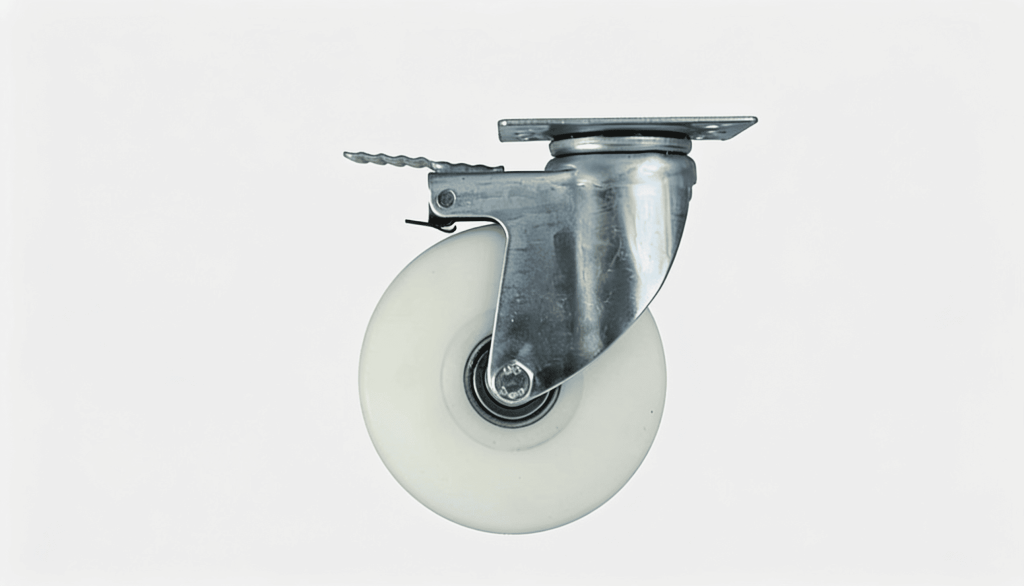
One of polypropylene’s most useful traits is its near-zero moisture absorption. Polypropylene has a water absorption rate of less than 0.1%, making it highly resistant to swelling or degradation in wet or humid conditions. This quality makes it a smart pick for food service environments and storage facilities with regular cleaning cycles.
Pros of Polypropylene Caster Wheels
- Lightweight material that contributes to easier maneuvering, especially with lighter loads
- Excellent resistance to acids, alkalis, and a wide range of chemicals
- Near-zero moisture absorption, well-suited for wet, humid, or frequently cleaned environments
- Rolls quietly on smooth floors, reducing noise in sensitive environments like offices or medical facilities
- Lower price point, making it attractive for large-volume purchases or budget-sensitive projects
Cons of Polypropylene Caster Wheels
- Lower load capacity compared to nylon caster wheels
- Less impact resistance, meaning it can crack or break under heavy shock loads
- Lower heat tolerance, before the material starts to deform
- Not ideal for rough or uneven surfaces where abrasion resistance matters
Best Applications for Polypropylene Caster Wheels
Polypropylene caster wheels are a natural fit for retail display units, light-duty trolleys, medical supply carts handling lighter equipment, and hardware storage solutions where loads are manageable and the environment involves moisture or chemicals.
What is the Difference Between Nylon and Polypropylene Caster Wheels?
The table below summarizes the properties of nylon and polypropylene to help you evaluate which material best fits your application at a glance.
| Property | Nylon | Polypropylene |
| Load Capacity | High | Moderate |
| Impact Resistance | Excellent | Good |
| Heat Resistance | Up to 120°C | Up to 80°C |
| Chemical Resistance | Moderate | High |
| Moisture Absorption | Low (absorbs slightly) | Very Low (non-absorbent) |
| Floor Protection | Hard surfaces (may scratch) | Hard surfaces (smoother roll) |
| Noise Level | Moderate to loud | Quieter roll |
| Price Range | Higher cost | More affordable |
| Best Use Case | Heavy industrial, medical equipment | Light to medium loads, wet areas |
| Weight | Heavier material | Lightweight material |
How to Choose the Right Caster Wheel for Your Application
Comparing nylon vs. polypropylene helps you understand their strengths and limitations. Choosing the right one depends on how and where the caster wheels will be used.
Choose Nylon Caster Wheels When:
- Your application involves heavier loads
- Equipment operates on rough concrete, gravel, or uneven surfaces
- The environment involves high heat exposure, such as in warehouses near kilns, industrial ovens, or manufacturing lines
- You need casters that can absorb repeated impact without cracking, which is common in heavy material handling
- Durability and longevity matter more than upfront cost, especially for high-frequency use equipment
Choose Polypropylene Caster Wheels When:
- Loads are light to moderate
- The floor surface is smooth tile, vinyl, or polished concrete, where you want quieter movement
- Chemical exposure is a factor, such as in cleaning, food service, or pharmaceutical environments
- The environment is wet or frequently washed down, since polypropylene’s near-zero moisture absorption prevents swelling and degradation
- Cost efficiency is important, such as when outfitting a large number of trolleys, carts, or furniture
It is also worth noting that some applications benefit from combining both types of caster wheels. A warehouse, for example, might use nylon caster wheels on its heavy pallet movers while fitting polypropylene casters on lighter utility carts.
Thinking in terms of the job each wheel actually needs to do will always lead to better procurement decisions than defaulting to a single material across the board.
A useful rule of thumb: if you are unsure whether your load falls within polypropylene’s range, go with nylon. Overspecifying is safer and cheaper than replacing broken caster wheels.
Match the Right Wheel to the Right Job with Global Nexus
Choosing between polypropylene vs. nylon caster wheels starts with understanding the demands of your application. Factors such as load capacity, floor conditions, exposure to moisture or chemicals, and operating environment all influence which material will deliver the best results.
Selecting the right caster wheel delivers better performance, durability, and value over the long term.
Global Nexus supplies a wide range of high-quality industrial caster wheels and hardware solutions for warehouses, construction projects, and commercial developments across the Philippines.
Backed by years of experience in supplying industrial hardware, Global Nexus works with businesses across various industries to provide reliable mobility solutions that meet their operational requirements.
Whether you need caster wheels for heavy-duty equipment or material handling systems, our team can help you choose products that match your specific needs.
Contact us today to request a quote and find the best caster wheel solution for your application.